
Search New Haven County Genealogy
New Haven County genealogy records are built through local office research, state-level routing support, and archive index work. This page helps you search birth, marriage, and death records for New Haven County, use local and statewide channels in the right order, and document evidence clearly. The objective is to reduce failed requests and keep every records step tied to a specific office and timeline.
New Haven County Search Strategy
New Haven County genealogy records are shaped by town-level record custody, statewide support pathways, and archive indexes that help identify older events.
Researchers in New Haven County generally get better results when they start with known towns and only expand search scope after checking index references and office routing details.
The historical county frame is useful for organizing search plans, but local registrars remain the primary record custodians for most vital events in Connecticut.
Start with New Haven County FamilySearch guidance, then use state contact listings and request procedures to route each inquiry.
New Haven County Local Context
New Haven County has an estimated population of 863,700. New Haven County combines major city records with long-running town clerk traditions. Local town or city offices remain central for most genealogy requests, with state systems and library resources used to expand or verify results.
When events predate broad state reporting, researchers often combine town records with town guides and Barbour references to narrow records location before filing a copy request.
Conflicting record details should be resolved by comparing event date, filing location, and source type. This method prevents premature conclusions in long county-level family reconstructions.
Note: County pages are planning tools; town and city registrars are typically the issuing offices for certified copies.
New Haven County Access Framework
Connecticut access language is summarized in Section 7-51 and Chapter 93. Researchers should align request wording with eligibility and redaction guidance before submission.
For broader research context, use State Library genealogy resources and index guides to map search scope and avoid repeating prior requests.
New Haven County Image Sources
New Haven County records researchers can review CT State Library History & Genealogy to confirm office scope and search pathways.
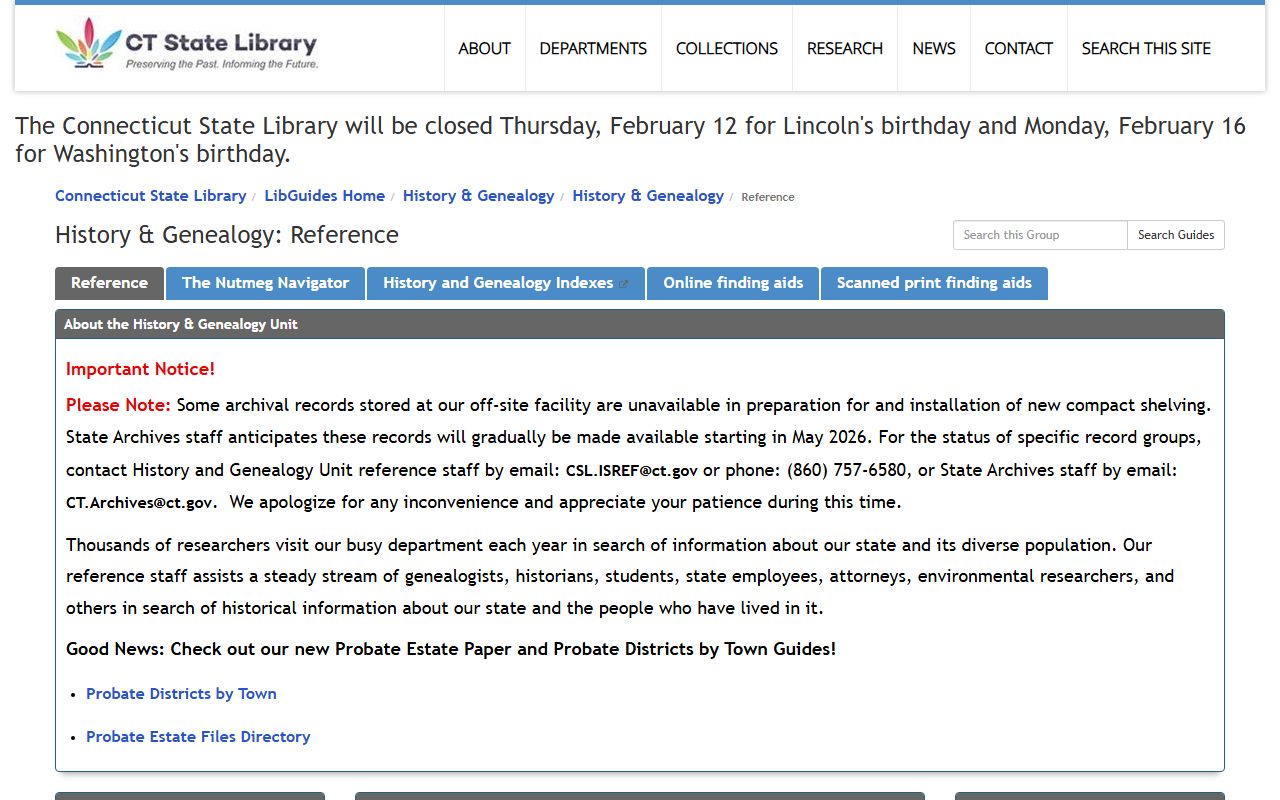
This source gives practical context for New Haven County genealogy records requests and follow-up work.
New Haven County Practical Steps
Use this checklist before each New Haven County request:
- Confirm likely event locality before filing
- Check date ranges against index clues
- Submit full names and known variants
- Track response dates and office notes
- Store source links with each finding
A clear project log is the fastest way to keep county-level genealogy research accurate across multiple offices and repeated surnames.
New Haven County Research Practice
New Haven County research benefits from periodic quality review. Re-check unresolved entries, verify older assumptions, and update citations when new records clarify names or dates. This step prevents drift in multi-year projects.
When a line branches across several towns, compare all available records in one timeline rather than evaluating each document in isolation. That approach strengthens conclusions and improves collaboration with other family researchers.
If an office response is incomplete, capture the exact limitation in notes and schedule a targeted follow-up request. Focused follow-ups are usually faster than broad re-submissions.
New Haven County Research Notes
New Haven County genealogy projects benefit from structured review. After each response, capture what was confirmed, what remains uncertain, and what source should be checked next. This process avoids circular searching and keeps records work efficient. When names repeat across generations, timeline-based notes become essential for distinguishing individuals with similar details.
Use a two-pass method for stronger evidence control. In pass one, collect likely matches from local offices, indexes, and archive guides. In pass two, compare those records for consistency in place, date, and family relationships. Mark each finding by confidence level and note why a specific record is being treated as primary evidence. This method produces cleaner lineage files and supports reliable updates when new records surface.
For long-running projects, schedule periodic review of unresolved entries. Confirm that contact information, request procedures, and file references remain current. Small maintenance steps preserve research quality and reduce delays in later phases of family reconstruction.
Cities in New Haven County
Use these city pages for location-specific records guidance within New Haven County.