
Search Connecticut Genealogy Records
Connecticut genealogy records are held across town and city registrar offices, statewide vital records systems, and library archives, so the best results come from matching each request to the right jurisdiction and timeframe. This page explains how Connecticut genealogy research works for birth, marriage, and death records, how to use local and state resources together, and how to build a reliable search log for long family timelines. You can use this guide to reduce failed lookups, plan requests in the right order, and keep records evidence organized from first search to final citation.
Connecticut Genealogy Workflow
Start with location. Connecticut’s local offices keep original records for events in their jurisdiction, while state systems provide broad access for many events from July 1, 1897 forward. When a family line is tied to one known town, local requests often move faster and return clearer records context. When the location is unknown, use statewide indexes and town guides first, then file a targeted request once the most likely location is identified.
The Department of Public Health outlines statewide routing at the Connecticut vital records portal. You can cross-check office routing with the statewide town clerk directory and request procedures at the records request instructions page. For birth-specific restrictions and access windows, use the birth certificates guidance page.
A practical genealogy workflow in Connecticut is to capture full names, name variants, event type, and date range in a single log before submitting requests. That log should also include office contacts, response dates, and reference links. This approach keeps projects traceable, especially when the same surname appears in multiple towns over several decades.
Connecticut Archives and Access Rules
The Connecticut State Library supports deep genealogy work through its History and Genealogy Unit and town-level archival guidance. Use the State Library genealogy portal, town guide pages, and Barbour Collection information when events predate broad statewide reporting. Researchers can also use vital records index guides and contact library staff via the library email contact form.
Connecticut statutes govern access and redaction rules for many record classes. For core access language, review Section 7-51 and Chapter 93. For data request context tied to research frameworks, review Section 19a-25. These references help researchers align request language with active statutory rules.
Note: Index findings should be treated as routing clues, then validated with office-issued records before drawing final conclusions.
Connecticut Source Images
Connecticut researchers can check CT State Library History & Genealogy before choosing a request route.
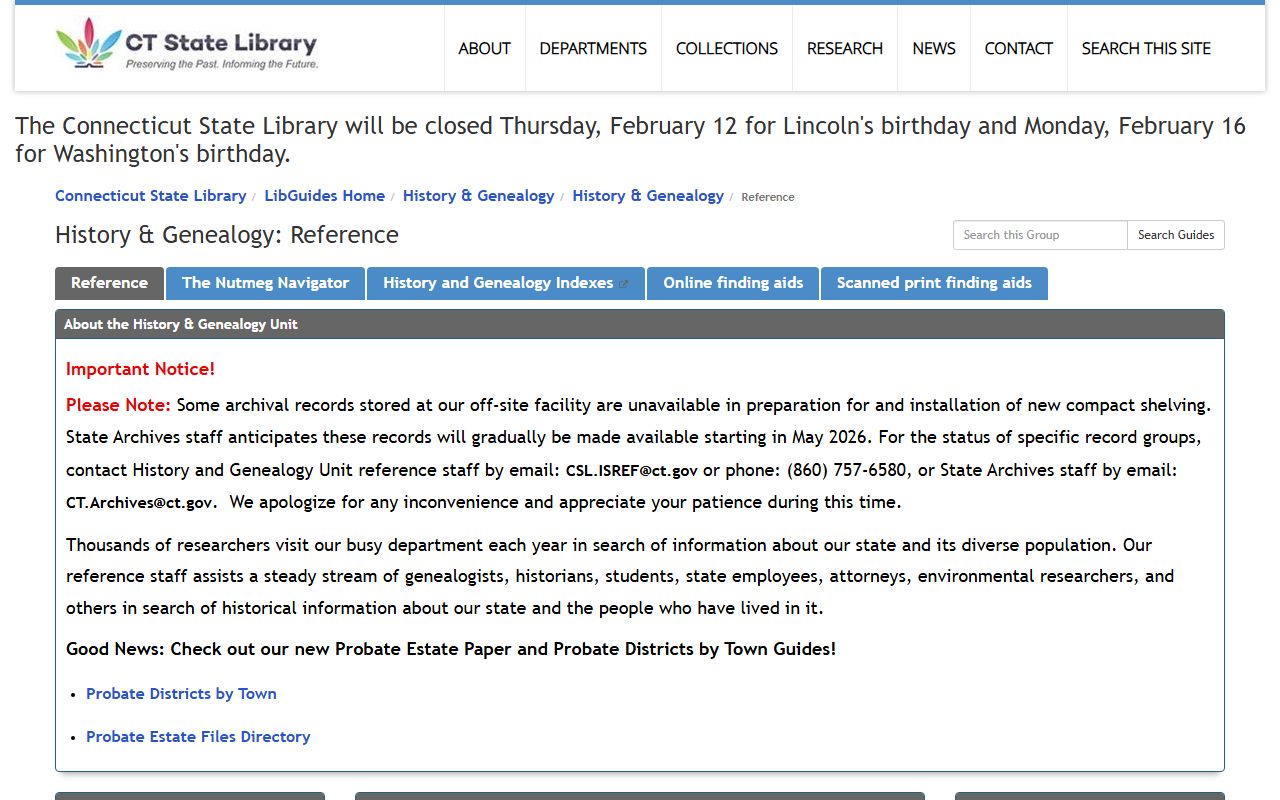
This reference helps align request method, office jurisdiction, and expected record coverage.
Connecticut researchers can check Vital Records for Connecticut Guide before choosing a request route.
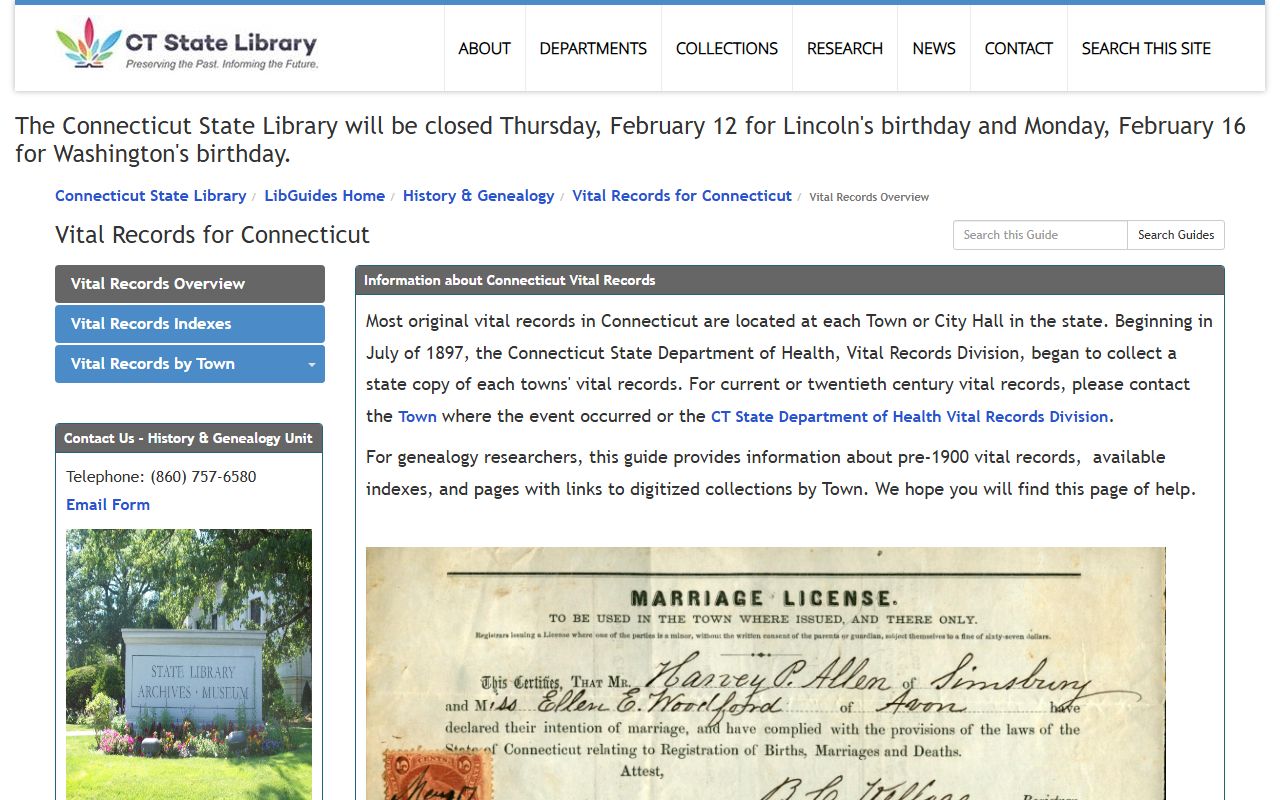
This reference helps align request method, office jurisdiction, and expected record coverage.
Connecticut Practical Checklist
Use this checklist to keep Connecticut genealogy records requests complete and consistent:
- Confirm event town or city before filing
- Use index references to narrow date windows
- Submit full legal names and known variants
- Track every office response with dates
- Preserve source links for each conclusion
Connecticut projects are easier to maintain when each surname line has one evidence file that combines record images, source links, and decision notes. That file becomes essential when comparing conflicting records across offices.
Connecticut Research Discipline
Connecticut genealogy research is strongest when each conclusion is tied to a specific record copy, source date, and office response note. Researchers should separate direct evidence from supporting evidence so each timeline decision remains transparent. Direct evidence includes the certificate or ledger entry itself. Supporting evidence includes index clues, local context notes, and follow-up messages from offices. Keeping both categories in one file allows later review without retracing every step from memory.
A disciplined workflow also improves speed. Before each new request, review prior responses, confirm unresolved date ranges, and verify that the next office is the correct jurisdiction for the target event. This step prevents repeated requests and reduces cost over long projects. It also helps when family lines move across several towns, where similar names can appear in multiple records sets during one generation. Consistent documentation protects your final conclusions and keeps project quality stable over time.
Connecticut genealogy projects also benefit from periodic maintenance. Revisit unresolved entries, update office notes, and confirm that each conclusion still matches the best available source. This routine protects long timelines from drift and helps researchers make consistent decisions when new evidence appears.
Good genealogy work is iterative. Re-check open questions, update references after each response, and keep a dated summary of what changed. These small habits prevent confusion and make later verification much easier.
County Pages
County pages localize Connecticut genealogy guidance by historical county geography.
Major City Pages
City pages localize workflows for Connecticut locations above 25,000 population.